Which lab tests are used to diagnose diabetes?
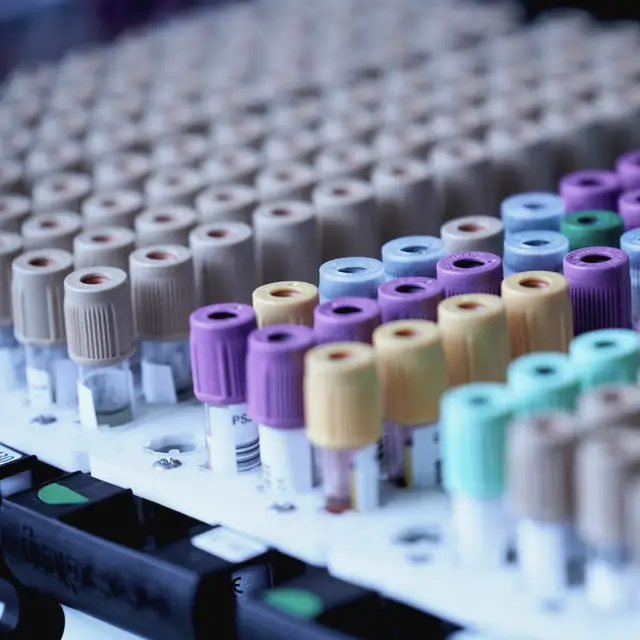
Diabetes isn’t diagnosed from a single measurement but with one of four defined laboratory tests. They are fasting blood sugar, the glucose tolerance test, HbA1c, and a random blood sugar drawn while symptoms are present. One shows the picture right now; another averages recent months.
Each test reads the blood differently. Fasting blood sugar is what a night without food leaves by morning. You drink a sweet liquid for the tolerance test; a draw two hours later shows how fast your body clears the load. HbA1c counts the sugar stuck to hemoglobin in red blood cells, roughly the past two to three months. A random reading only counts alongside symptoms: thirst, frequent urination, weight loss.
- Fasting blood sugar: one morning, and the only preparation it asks for is the fast itself.
- Tolerance test: glucose drunk on an empty stomach, blood measured two hours later.
- HbA1c: an average spread over months, no fasting needed.
- Random measurement: counts when thirst and frequent urination are plainly there.
A single high result is not a diagnosis. The World Health Organization wants a high result in someone without symptoms repeated another day, preferably with the same test. With plain symptoms and a clearly high result, no repeat is needed. The lab’s hurry comes from here too: glucose drops as blood waits, so the sample is separated at once or set in ice water.
HbA1c isn’t equally reliable in every body. It depends on how long red blood cells live, so certain anemias, hemoglobin variants, and diseases that speed their turnover shift the result. One sentence from the World Health Organization’s HbA1c consultation report stands right here: a result below the threshold does not overturn a diagnosis made with glucose tests.
- Which test picks up borderline diabetes?
- Alone, the fasting measurement misses a group only the tolerance test reveals. That test shows the region between fasting and fed; it’s ordered when fasting values sit at the borderline.
- Why does timing matter in the tolerance test?
- The lab draws the second sample at exactly two hours. Earlier or later blood hits a different point on the curve; reliability rests on that precision.
- How do you tell type 1 from type 2?
- The split starts with the clinical picture: age, speed of onset, weight, ketosis. When it stays unclear, islet antibodies help.
Sources
- World Health Organization. Classification of diabetes mellitus. Geneva: World Health Organization; 2019. ISBN 978-92-4-151570-2.
- World Health Organization, International Diabetes Federation. Definition and diagnosis of diabetes mellitus and intermediate hyperglycaemia: report of a WHO/IDF consultation. Geneva: World Health Organization; 2006. ISBN 978-92-4-159493-6.
- World Health Organization. Use of glycated haemoglobin (HbA1c) in the diagnosis of diabetes mellitus: abbreviated report of a WHO consultation. Geneva: World Health Organization; 2011. NCBI Bookshelf NBK304271.
- Türkiye Endokrinoloji ve Metabolizma Derneği (TEMD). Diabetes Mellitus ve Komplikasyonlarının Tanı, Tedavi ve İzlem Kılavuzu-2026. 17. Baskı. TEMD; 2026. ISBN 978-625-99759-8-6
- Türkiye Diyabet Vakfı. TÜRKDİAB Diyabet Tanı ve Tedavi Rehberi 2026. 15. Baskı. Türkiye Diyabet Vakfı; 2026. ISBN 978-625-94103-5-7