What is a portion, and how is it measured?
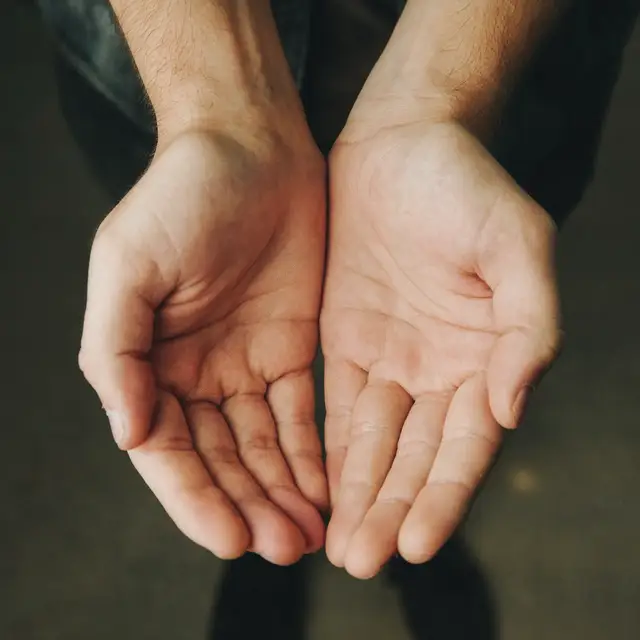
A portion is the amount a person puts on their own plate; a serving size is the amount the package assumes. The two often don’t match. Measuring a portion doesn’t take a scale, because your hand size and dividing the plate are with you at home and on the road. No numbers needed; proportions are enough.
A portion is fuzzy mainly because everyone’s measure differs. This page skips the package numbers; the amount behind a serving size belongs to “How to read a nutrition facts label.” The real question comes next: with no package, how do you estimate the amount on a plate without a scale? Food set on the table has no label. The second hurdle to estimating is the plate itself.
Plate size comes into it too. What if what grows the amount is the container itself, not the food? The article on the question “how much to eat” measured that trap; big plates and big packages quietly grow the portion. This page looks at the solution side of the same trap.
Hand measures are a practical approach that arose to fill exactly this gap. No scale needed, and everyone’s hand is proportional to their own body. In a comparison of forty-two foods, hand and finger measures came out more accurate than cup and spoon measures for foods with neat geometric shapes. Both methods struggled with irregularly shaped pieces like fish or chicken breast. So the hand is an estimating tool, not a stand-in for the scale. Here are the rough matches in common use.
- Palm: protein-heavy foods like meat, chicken, and fish
- Fist: bulky foods like non-starchy vegetables and whole fruit
- Cupped hand: grainy foods like pasta, cooked grains, and legumes
- Thumb tip: small amounts like oil, sauce, and thick spreads
Your kitchen cups and spoons are measures too. Another article called the scale a temporary tool that trains your eye in a few weeks; one evaluation also measures that. Participants rated the scale the most accurate tool, but the one they least wanted to keep up. Cups and spoons they found both easy and sustainable. That tension between accuracy and continuity sums up the portion question.
The plate method drops numbers entirely and looks at area. Half the plate holds non-starchy vegetables, a quarter protein, a quarter carbohydrate-heavy food. In a diabetes education study comparing the two, the plate method and gram counting gave similar results. The difference was in the arithmetic, because the plate method requires no math. For someone uneasy with numbers, that’s no small detail.
Neither method gives grams; both give proportions. Soupy dishes, mixed plates, and heavily sauced foods strain both. Using the same bowl and the same plate makes estimates easier to keep close. A container that changes every time ruins the measure from the start. Portion education is shaped to the person and usually runs alongside a dietitian.
Sources
- Gibson AA, Hsu MSH, Rangan AM, Seimon RV, Lee CMY, Das A, Finch CH, Sainsbury A. Accuracy of hands v. household measures as portion size estimation aids. Journal of Nutritional Science, 2016;5:e29. doi:10.1017/jns.2016.22
- Faulkner GP, Livingstone MBE, Pourshahidi LK, Spence M, Dean M, O’Brien S, Gibney ER, Wallace JMW, McCaffrey TA, Kerr MA. An evaluation of portion size estimation aids: precision, ease of use and likelihood of future use. Public Health Nutrition, 2016;19(13):2377-2387. doi:10.1017/S1368980016000082
- Bowen ME, Cavanaugh KL, Wolff K, Davis D, Gregory RP, Shintani A, Eden S, Wallston K, Elasy T, Rothman RL. The Diabetes Nutrition Education Study Randomized Controlled Trial: a Comparative Effectiveness Study of Approaches to Nutrition in Diabetes Self-Management Education. Patient Education and Counseling, 2016;99(8):1368-1376. doi:10.1016/j.pec.2016.03.017
- American Diabetes Association Professional Practice Committee. 5. Facilitating Positive Health Behaviors and Well-being to Improve Health Outcomes: Standards of Care in Diabetes-2026. Diabetes Care. 2026;49(Suppl 1):S89-S131. doi:10.2337/dc26-S005