What happens if you miss a medication dose?
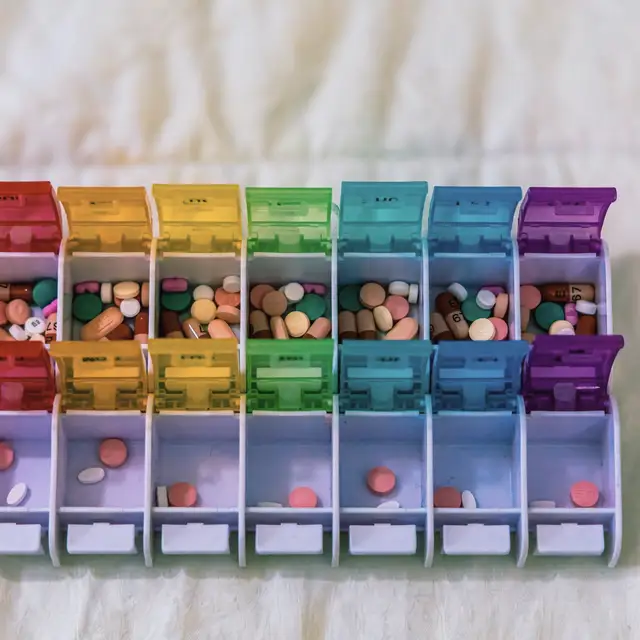
A missed dose doesn’t mean the same thing with every drug, because how long the effect lasts changes from drug to drug. A pill whose effect runs long and a short-acting drug taken with a meal aren’t equal either. What really decides it is how long the drug stays in the body and the curve its effect draws.
A drug isn’t done once it enters the mouth; the body breaks it down slowly and clears it out. That clearing speed has a rough measure: half-life. A long-half-life drug still leaves some in the blood when a dose is skipped; the gap passes softly. With a short one the level falls fast and the in-between opening shows earlier. In two separate drugs, therefore, a delay of the same length produces two results that look nothing alike. In the sources, long-half-life drugs sometimes even get called “forgiving.”
Medications taken with a meal work by another logic. Their job is meeting that meal’s glucose wave. Once the meal passes, so does the wave; the drug has no target left, so the whole equation changes. A late dose therefore doesn’t mean what it means with a long-acting drug.
Two doses stacking up brings its own result. The two effect windows overlap in the same stretch and the total effect grows. In pancreas-stimulating drug families and in insulin, that overlap can pull blood sugar too low; when the effect fades also turns uncertain. With long half-life drugs the picture differs: mathematical modeling finds a much smaller swing here. The two cases don’t fit in one sentence.
| How long the drug acts | What a skipped dose changes |
|---|---|
| Long half-life, falls slowly | What’s left in the blood carries the gap a while; no sudden drop |
| Short half-life, falls fast | The effect ends quickly; the opening shows earlier |
| Taken with a meal | If the meal has passed, so has the load it would meet |
| Injected basal insulin | A flat profile spreads the gap; no crowding into one moment |
Single skipped doses and a settled, ongoing irregularity aren’t the same either. A dose slipping now and then doesn’t weigh enough to set the long-term picture across months alone. A disruption lasting weeks, though, leaves a mark on the three-month average. And that mark isn’t easy to erase. Seeing the difference eases needless guilt.
Forgetting itself isn’t random either; habit leans on repeating cues around you. With the phone alarm on silent, the cue vanishes and the habit chain breaks. Out of sight, the strip’s emptied pockets leave no trace to look back at. When mealtimes slide, so does the cue for the medication taken with them. When the cue returns, the habit recovers too.
From here you see why no single answer for a missed dose fits everyone. Which drug carries which gap, and how far, is shown by its own product information and the team managing the treatment. Talking on a calm day is far easier than trying to decide in the flustered moment the gap gets noticed. The next checkup suits exactly such a conversation.
Sources
- Counterman ED, Lawley SD. What should patients do if they miss a dose of medication? A theoretical approach. Journal of Pharmacokinetics and Pharmacodynamics. 2021;48(6):873-892.
- Shiomi M, Takada T, Otori K, Shibuya K. Frequency of missed doses and its effects on the regulation of glucose levels in patients with type 2 diabetes: a retrospective analysis. Medicine (Baltimore). 2024;103(15):e37711.
- American Diabetes Association Professional Practice Committee. 9. Pharmacologic Approaches to Glycemic Treatment: Standards of Care in Diabetes—2026. Diabetes Care. 2026;49(Suppl 1):S183–S215. doi:10.2337/dc26-S009
- Thota S, Akbar A. Insulin. In: StatPearls [Internet]. Treasure Island (FL): StatPearls Publishing; updated 10 July 2023.