Readings and numbers
HbA1c and averages
 How do you convert between blood sugar units?A blood sugar number with no unit is incomplete information, because the two scales differ many times over. Blood sugar’s two writings convert into each other by a fixed factor. HbA1c’s two scales convert not by a factor but by a published relationship. Which gets printed is decided at the country level. · 2 minRead more
A blood sugar device and a lab’s method both measure one thing: the blood’s glucose concentration. That concentration is written on paper two ways. One divides mass by volume, giving the result in milligrams per deciliter. The other counts the amount of substance, writing it in millimoles per liter. Both ways describe the same concentration.
The split is historical. Some countries kept the mass-based writing; the rest, moving to the international unit system, began printing results as an amount of substance. The step between them is fixed, because a glucose molecule weighs the same whichever country measures it. Dividing the mass-based number by 18 gives the amount-of-substance scale; multiplying by 18 brings it back. The conversion does not shift by country, is not adjusted per device, not updated over the years.
On paper, the divergence is sharper in the line labeled HbA1c, A1c, or glycated hemoglobin. One scale reports a percentage, tied to the older writing the large clinical trials used. The other counts directly how much of the hemoglobin carries sugar, writing it in millimoles per mole. So the number’s order of magnitude shifts completely. The conversion here is not one multiplication but a relationship with slope and starting point, published by international agreement and checked regularly. The lab printing the result and the health care team can both state the same result on the other scale; no information escapes the reader.
| Measure | One scale | Other scale | Relationship |
|---|---|---|---|
| Blood sugar | Milligrams per deciliter (mg/dL) | Millimoles per liter (mmol/L) | Converted by a fixed factor |
| HbA1c | Percent (NGSP/DCCT scale) | Millimoles per mole (IFCC scale) | Converted by a published relationship |
Which scale gets printed is decided at the country level. In some places both writings go on the paper together, elsewhere only one. Seeing one scale on a foreign report is therefore ordinary, and that one scale may not be the reader’s usual one.
Most often, the paper itself says which scale it uses. The unit sits right beside the result or in the column heading; that small print is among the page’s most decisive details. A second number may appear in parentheses. It is either the same result on the other scale, or the lab’s reference range, or a note about the method. The unit printed beside the parentheses tells you which.
One more number carries the lab result into the language of everyday measurements: estimated average glucose. Its own article stands outside this page.
On a test done abroad, the small print right beside the result carries one of four abbreviations: mg/dL, mmol/L, the percent sign, or mmol/mol. Every value on the page is read on that abbreviation’s scale.
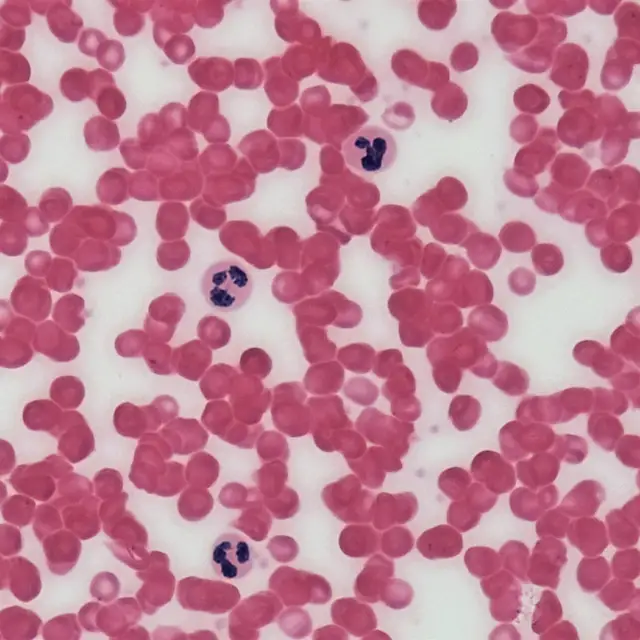 What is HbA1c, and why the three-month name?HbA1c is a ratio showing how much of the hemoglobin in your blood has glucose stuck to it. Once glucose attaches it doesn’t come off; the cell carries that trace as long as it lives. Red blood cells live a few months, so the result tells weeks, not a day. Three months is the window where the trace builds up. · 2 minRead more
Every red blood cell is packed with hemoglobin. When sugar rises, some glucose sticks to this protein and stays; the cell can’t undo the bond. Each cell keeps its own ledger. The lab reads not one cell but the whole crowd’s shared ledger.
Each red blood cell lasts a few months, then a new one replaces it. Your blood holds every age: cells out of the bone marrow yesterday, and cells months old. That’s why the World Health Organization report defines the test as average plasma glucose over the past eight to twelve weeks. The name three-month sugar test comes from there.
| Name on the report | What it means |
|---|---|
| HbA1c or A1c | Standard shorthand for the hemoglobin fraction with glucose bound |
| Glycated hemoglobin | Medical name for the same test; glycated means sugar-bound |
| Glycosylated hemoglobin | Older name; glycated won out since the bond needs no enzymes, yet reports still show it |
| Three-month sugar test | Everyday name for the stretch the measurement covers |
Not every day weighs the same. In Tahara and Shima’s kinetic measurement, HbA1c was a weighted average reaching back a hundred days; recent weeks outweigh distant ones. Distant weeks still sit in the result; the window doesn’t close, it slides.
Not everything that moves the number is sugar. The test reads hemoglobin and red blood cells, so anything touching the blood mixes in. The World Health Organization lists these in a separate annex:
- Conditions that shorten red-cell lifespan (hemoglobin variants, an enlarged spleen, certain drugs) pull the result down.
- Iron or B12 deficiency slows blood production and pulls the result up.
- Removing the spleen keeps cells circulating longer; the result goes up.
- Inherited hemoglobin variants shift the result either way, depending on the lab’s method.
The lifespan itself isn’t the same in everyone. In Cohen and colleagues’ measurement, average red-cell age in people with normal blood counts ranged from thirty-eight to sixty days. Same sugar, different result: only because the cells renew at different speeds; the number tracks the crowd’s average age.
- How is HbA1c pronounced, and what does it stand for?
- Letter by letter: aitch-bee-ay-one-see. Hb is short for hemoglobin; A1c names one of the hemoglobin subfractions the lab separates. A report saying only A1c means the same test.
- How long does HbA1c take to drop?
- Slowly. In Tahara and Shima’s measurement, half the drop took over a month. Weekly retests just show the same window again.
- Why doesn’t my fingerstick average match my HbA1c?
- The two don’t count at the same frequency. Your fingerstick average counts only measured moments; sleep hours and skipped meals stay out. Nathan’s team built the average glucose relationship from frequent, regular fingersticks alongside continuous monitoring. The difference isn’t the fingerstick, it’s the frequency.
 Why is HbA1c checked every three months?The three-month interval for HbA1c comes from biology, not the calendar: red blood cells renew constantly, and each lives a few months. As the crowd refreshes, the old record leaves circulation and a new one arrives. That renewal speed sets the interval’s length. So a change takes time to show up on paper. · 2 minRead more
An HbA1c test doesn’t check a single cell. It samples every red blood cell then in circulation, all at once. The crowd’s makeup shifts a little each day; the oldest withdraw, new ones arrive. The three-month interval comes from that rate of changing places.
Renewal speed decides how far back the record reaches. About half the measured value is the trace of the last few weeks (Tahara and Shima, 1995). The rest spreads over older weeks, fading toward the window’s edge.
This has two consequences in daily life. First, an HbA1c checked just after starting a new routine still carries the old months’ record. An unchanged paper doesn’t mean the routine isn’t working; the paper just hasn’t refreshed. A result checked too soon shows a mix of the old stretch and the new. Second, checking too often, back to back, brings no new information, because the windows overlap.
Three months is long enough for the red cell population to refresh meaningfully, short enough not to miss the trend. The interval sits exactly between those two pressures. A wider interval reports both improvement and decline late.
That the interval differs from person to person follows the same logic. What sets the frequency isn’t the calendar. It’s how much the picture is moving.
- If treatment has just changed, the window closes sooner
- If the picture has held its place for months, the interval widens
- In pregnancy the monitoring plan splits off entirely; pregnancy guidelines separately set the frequency and the leading test
- If something affects red cell lifespan, the turn passes to other measures
The time in between isn’t empty. A morning reading, an evening one, and continuous monitoring fill the three months between two HbA1c results. HbA1c is a backward-looking summary; a measure of what happens inside the day is something else entirely. That’s why the logbook closes the gap between the papers.
This piece is for information only; it is not a diagnosis, treatment or dosing recommendation. Always make decisions about your treatment together with your doctor.
Start keeping your own record
ForMyGluco keeps your readings, medications and appointments in one place, and prepares a doctor-ready PDF in a single tap.