Medicines and insulin
What medicines do
 How do GLP-1 injections differ from one another?Not every injected medicine used in diabetes is insulin; some stand in for a hormone the gut releases after a meal. This family is not one piece either. Its members differ by how they are given and which receiver they bind on the cell, not by the name on the box. · 2 minRead more
What the family shares is this: it stands in for a hormone the gut releases after a meal. That hormone ties the pancreas’s insulin release to the meal, slows stomach emptying and stretches fullness. Where the family touches the body is covered by “In how many groups are diabetes medicines divided?”. The question here is narrower.
The first split is visible. Most of the family is given under the skin, while one member also has a form taken by mouth. This is not just a difference of box; absorption conditions differ, so comparison studies measure the two forms separately.
The second split cannot be seen. Cell surfaces carry receivers that recognise these hormones, that is, receptors. Most of the family binds one receptor while one member binds two: the GLP-1 receptor and that of a second meal hormone called GIP. Its active substance is tirzepatide, and double binding gives a different answer.
The third difference shows up at the pharmacy and is not really one: the same active substance is sold under other names from country to country. The large name on the box is the brand. The medicine’s own name stands under it in small letters, and that second one serves when keeping a record.
- Are these injections insulin?
- They are not. Insulin steps straight into the place of what is missing; this family stands in for a hormone released after a meal and ties the pancreas’s own release to it.
- Is the form taken by mouth the same as the injection?
- The active substance is the same, the absorption conditions are not. That is why comparison studies measure the two forms separately and report their results separately.
- Why is the member binding two receptors named apart?
- Because alongside the GLP-1 receptor it also binds the GIP receptor; the answer measured differs from members binding one receptor.
Which member suits whom is not tied to one measure. The kidney and heart picture, weight, other medicines and daily routine are weighed together. That weighing is best done with a doctor.
 What is Mounjaro, and does it help weight loss?Mounjaro is the trade name of a prescription injection whose active substance is tirzepatide, given under the skin once a week. The same box is authorised for two jobs: type 2 diabetes and weight management. It was measured effective for weight loss, but alongside diet and activity, not alone. · 3 minRead more
After a meal the gut releases hormones that send word to the pancreas. Cell surfaces carry receivers that recognise them; medicine calls these receptors. Tirzepatide stands in for two hormones and binds two receptors at once. The other members of the family bind one, and that is what sets it apart. The family as a whole is covered by “How do GLP-1 injections differ from one another?”
The European authorisation carries two headings:
- Type 2 diabetes: it strengthens the insulin answer the pancreas gives a meal, where the picture is not adequately controlled.
- Weight management: it lowers appetite, slows the stomach and stretches fullness. Written for adults with obesity, or excess weight alongside a problem such as blood pressure, blood fats or sleep apnoea.
One sentence repeats under both headings: the medicine sits beside a diet and activity routine, not in place of it. It is given with a pre-filled pen, into the abdomen, thigh or upper arm, on the same day each week.
The weight question has a clear study answer. More than two thousand adults with obesity, or excess weight alongside another problem, were followed for seventy-two weeks together with diet and activity. Average loss came out near one sixth of body weight; on placebo it was closer to one thirtieth. The weightier part of it came from fat tissue.
The detail that matters shows up on stopping. Another study compared those who continued with those moved to placebo, and most of the lost weight came back in the group that stopped. The effect is tied to the time of use, so what lasts is not the box but the routine beside it.
- Is the injection enough on its own?
- It is not. The authorisation defines it beside a diet and activity routine, and in the studies it was never given alone. It does not replace that routine; it supports it.
- Are Mounjaro and Ozempic the same thing?
- They are not; the active substances differ. Ozempic carries semaglutide and binds one receptor, tirzepatide binds two. The same substance is sold in the United States for weight under a separate name, Zepbound; in Europe both headings sit under Mounjaro.
- Can someone without diabetes use it for weight?
- The authorisation allows it conditionally: obesity, or excess weight alongside another health problem, is looked for. Suitability is the doctor’s call.
- What are the side effects?
- Most often nausea, vomiting, abdominal pain, constipation and diarrhoea. Most pass mild or moderate and show up after a dose is raised. The rare but serious one is inflammation of the pancreas, recorded as a reported event. The thyroid tumour warning met often online comes from a rat study, and the same document writes that its relevance in humans is unknown.
- Is it more effective than semaglutide?
- A seventy-two week study compared the two directly: in adults with obesity and without diabetes, loss came out larger on tirzepatide. The maker of the medicine funded that study.
- How long is it used for?
- No end point is defined. Studies show the effect holds while use continues and draws back once it stops.
For someone who wants to lose weight the real question is not whether it works; the studies show it does. The problem is that the weight does not stay away once the medicine stops, and that it is not written for everyone. Because side effects are possible, use runs under a doctor’s watch.
 Why does treatment change over time?As the years pass, the same treatment stops working as well as it did, and a new name joins the medication list. The reason for the change usually goes unexplained. Yet type 2 diabetes has a progressive direction by nature; treatment has to keep pace with it over time. The mechanism is actually quite plain. · 2 minRead more
Insulin-making beta cells in the pancreas run at limited capacity. In type 2 diabetes that capacity is somewhat reduced even at diagnosis and keeps falling over the years. A drug’s job: use the capacity left right then and the tissues’ response. As capacity shrinks, the same support buys less. What changed isn’t the drug but the ground under it.
A common line: “the body gets used to the drug, so the effect wears off.” That isn’t true. The molecule itself doesn’t dull with time; the production capacity behind it does, and the difference starts exactly there. The same key still opens the same lock, but the room behind has shrunk.
This picture isn’t a guess; studies following thousands of people for years point the same way. Three years after diagnosis, roughly half reach target on one drug; by year nine it’s a quarter. So for most, more than one drug is the rule, not the exception. Every year with the disease widens that chance a little.
So adding a new name to the list is a treatment decision. The disease’s ground has shifted; treatment follows it. Nutrition and movement slow that ground; with clear, sustained weight loss, the numbers sometimes hold at target a while without medication. Another article covers that period’s name and limits. Still, the ground keeps sliding slowly in most people, and treatment changes again at some point.
Lost capacity isn’t the only reason. When kidney function drops, some families can’t stay in the picture. With heart failure or vascular disease, the choice follows not blood-sugar-lowering power alone but the heart and kidney protection it gives. Weight direction decides too; a pregnancy plan, the liver’s state, and the other drugs you take alongside rebuild the list. Which family fits whom rests on the doctor’s reading of the whole picture.
| Reason for change | Effect on treatment |
|---|---|
| Beta cell capacity declining | Same support buys less; a new family joins |
| Kidney function dropping | Some families leave the picture; others move up |
| Heart failure or vascular disease | Families with shown organ protection gain priority |
| Weight change | Families affecting weight direction get reweighed |
| When pregnancy comes up | Safety data narrows the choice |
| Complaints and interactions | When the fit breaks, the list is rebuilt |
The treatment plan, then, isn’t a fixed document but a living text gone over at regular intervals. Piling up records and taking them to the checkup makes review easier. Knowing why it changed turns the decision into a shared one.
 What are the side effects of diabetes medications?The side effects of diabetes medications don’t fit one shared list; each drug family leaves its own mark. In one family, stomach and bowel complaints stand out; in another, the risk of low blood sugar. This piece explains which mechanism gives rise to which kind of effect, not who will get what. · 2 minRead more
A side effect isn’t a random surprise. The unwanted effect comes from wherever the drug touches the body; a molecule working in the bowel makes noise in the bowel. One that flushes sugar through the kidney marks the urinary tract. So the side effect question is answered at the drug family level, not the person’s.
Metformin, the most common oral drug, marks the digestive tract. Nausea, gas and diarrhea are common in the first weeks; in most people they recede over time. They are the leading reason for stopping early. Some items show up in the first days. Others only reach measurements years later.
| Drug family | Prominent side effect type | Where it starts |
|---|---|---|
| Metformin | Stomach and bowel complaints | Bowel |
| Sulfonylurea | Low blood sugar, weight gain | Beta cell |
| SGLT-2 inhibitor | Fungal and urinary tract infections, fluid loss | Kidney and urinary tract |
| GLP-1 receptor agonist | Nausea and vomiting | Stomach |
| DPP-4 inhibitor | Usually quiet; joint pain reported | No clear place |
| Insulin | Low blood sugar, weight gain | All tissues |
Low blood sugar risk isn’t spread evenly across families. Drugs that push the pancreas, and insulin, keep working even when blood sugar is low; the real risk is born there. Metformin, the DPP-4 inhibitor and the family that flushes sugar into urine don’t carry this risk when used alone. GLP-1 receptor agonists don’t carry it when used alone either; they raise secretion only in response to a meal. When those same drugs come alongside a stimulator, the picture changes.
Rare items exist too, and the mind easily weighs them wrong. The paper inside the box stacks a common complaint and a picture reported once in thirty thousand. Metformin-linked lactic acidosis is in that second group; the piece on sick days covers the conditions that set the stage. In the family that flushes sugar into urine, ketoacidosis can appear even when blood sugar isn’t high; its mechanism is in that same piece too. Frequency and weight are two separate measures.
Most side effects cluster in the starting period. They fade within weeks. Noting which day a complaint began helps separate it from a stomach bug unrelated to the drug. Stopping the drug yourself has a separate calculation. When the side effect goes, the drug’s reason for being goes too; both outcomes run at once. The doctor who sees the person’s whole picture runs that calculation.
This list is a portrait of families, not people. Differences run inside a family too; the item prominent in one molecule stays in the background in its sibling. Of two people on the same molecule, one feels nothing. The other notices from day one. Age, kidney status, a person’s other drugs and eating pattern widen that gap.
 What happens if pills aren’t enough?If your pills one day stop doing the job you expect, it doesn’t mean you made a mistake somewhere. Oral medications work by pushing on machinery that already exists, and as that machinery weakens there is less to hold on to. The word failure here is a description of the drug, not a judgment about you. · 2 minRead more
Pills hit a ceiling at some point, set by the response margin your body has left, not drug strength. Why the margin narrows over the years belongs to another page: “Why does treatment change over time?” The question here is different: once the margin narrows, how long does each pill hold? A drug prodding the pancreas needs a pancreas that can answer. As capacity drops, its reach shortens; the literature calls that secondary failure. Options touching the liver or kidney don’t hit the same wall as fast.
| How it works | What happens as capacity declines |
|---|---|
| Drugs prodding the pancreas to release insulin | Effect fades as responding cells decline |
| Drugs curbing liver glucose production | Effect holds, but not alone |
| Drugs sending sugar out in urine | Independent of the pancreas, tied to kidney function |
| Insulin from outside | Replaces what is missing; pancreas doesn’t draw the limit |
The step doesn’t lead to one door. Most regimens add a second oral drug, then a third; molecules gripping at different points cover each other’s gaps. Once the pill options run out too, the turn passes to needle treatments. Not all of them are insulin. Most GLP-1 receptor agonists go by needle, because the digestive tract doesn’t pass them through unchanged. An oral form with a carrier substance exists too. A needle doesn’t necessarily mean insulin.
Insulin isn’t the only exit on this line, nor automatically the first. In a review of randomly assigned trials, low blood sugar is markedly rarer in people on non-insulin options, and the scale moves the other way. On the other hand, insulin has one advantage. Because it directly replaces what is missing, it works even after the other options run out.
Delay has a cost too, measured in years. The piece on starting insulin covers why the decision gets put off and what shortens the delay.
A needle treatment touches daily details too. Another box fills the spot the pill box left; your bag makes room too. Storage is one of them; “How do you store insulin?” takes that over. These topics aren’t outside the choice; they are the decision’s real parts. Starting a needle doesn’t mean dropping every oral drug either; most regimens keep the two side by side. The switch isn’t always one-way either; people return to oral options when weight and daily life change. As the line moves on, what changes is the tool. The disease itself and your effort both stay put.
 What does metformin do?Metformin is the most commonly used oral medication in type 2 diabetes, and its main job isn’t pushing the pancreas. Most of its effect shows up in the liver. The answer tissues give to insulin also picks up somewhat. Knowing how it works also puts what to expect from it in place. · 2 minRead more
Metformin bears down on the liver. In diabetes the liver’s own glucose output runs needlessly rich. The drug cuts that surplus most; its effect’s biggest piece comes from here. Second stop, the tissues: muscle and fat cells answer insulin somewhat better. Third stop, the gut; the molecule pools there, and part of the effect is born there.
Metformin isn’t in the pancreas-whipping family; it doesn’t raise insulin release directly. Its job: making the insulin already there carry weight. So used alone, low blood sugar isn’t an expected outcome. That risk’s spread among drug families isn’t this page’s subject; “What are the side effects of diabetes medications?” takes that comparison on.
| Where it acts | What happens |
|---|---|
| Liver | New glucose production recedes |
| Gut | Part of the effect is born here; the most common source of complaints too |
| Muscle and fat tissue | Answer to insulin picks up somewhat |
| Pancreas | No direct prodding |
| Weight | Neutral or tilting slightly down |
| Low blood sugar alone | Not an expected outcome |
The effect also comes on slowly. Metformin isn’t a button dropping sugar the moment you swallow it; it’s a regulator lowering the liver’s production tendency over weeks. So the first day’s reading doesn’t do the drug justice.
Side effects’ most common address: the stomach-gut side. Nausea, loose stools, belly discomfort. What’s particular to metformin: extended-release forms are gentler on this front. That’s why you see different forms of the same active ingredient at the pharmacy.
Years of use bring up a separate heading: vitamin B12 absorption. Metformin makes this vitamin’s absorption step harder in the small intestine’s last stretch; the effect sharpens over longer use. The change moves slowly. If signs like anemia or hand numbness show up, this possibility comes to mind. Kidney function is a deciding measure for metformin too, because the drug leaves the body by way of the kidney.
Metformin’s common “first choice” label still holds today. Decades of use behind it, a predictable effect, no load on the weight side. When a new drug joins, metformin most often stays put; the new molecule comes alongside, not in its place. Still, lowering sugar isn’t the only measure. When heart failure or kidney disease enters the picture, current guidelines expect drugs shown to protect the heart and kidney to join the list too.
Metformin is an old molecule, but not every detail is clear yet; how far gut flora and appetite join in is under study. What’s clear: it works without tiring the pancreas. The weight: cutting the liver’s excess production; a share on the gut side too. Best talked over with your doctor: its place in your own picture.
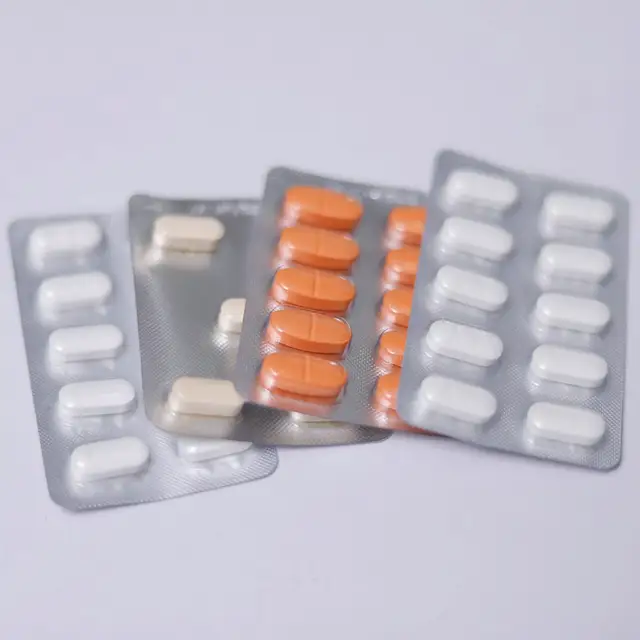 How many groups do diabetes medications fall into?Diabetes medications are grouped not by their names but by where they touch the body. How many groups you end up with depends on who makes the list; the table below has nine families. The name on the box is a brand; the real distinction lies in the division of labor among the liver, pancreas, kidney, and gut. · 2 minRead more
Two boxes on a pharmacy counter look like they do the same job. They don’t. One cuts the glucose the liver releases overnight; the other sends part of what the kidney filters into the urine. What classifies a drug isn’t the name on the box. It’s the organ it touches.
| Group | Where it touches | What it does |
|---|---|---|
| Biguanide (metformin) | Liver | Cuts the glucose released by the liver. |
| Sulfonylurea | Pancreas | Pushes beta cells to release insulin. |
| Glinide | Pancreas | Prods the same cells at mealtime. |
| Glitazone | Muscle and fat | Strengthens tissue response to insulin. |
| DPP-4 inhibitor | Cell surface | Slows the enzyme clearing the meal hormone. |
| GLP-1 family | Pancreas, stomach, brain | Ties insulin release to meals, slows the stomach. |
| SGLT-2 inhibitor | Kidney | Sends some filtered glucose out in urine. |
| Alpha-glucosidase inhibitor | Small intestine | Slows how fast starch breaks down. |
| Insulin | All tissues | Tops up the missing hormone from outside. |
The row count isn’t universal; some lists keep insulin separate, others add older families skipped here. More rows than organs: two families press the pancreas at different times, and the middle column holds the real information. Same-family boxes press one door in the body; different families, different doors. Knowing the family says more than the name. Flushing glucose through the kidney and slowing the stomach leave different marks on your day.
Guidelines don’t stack these names like a ladder. In the standards of care, drug choice is its own long chapter, decided by the other conditions you carry. In 2025 the World Health Organization added the GLP-1 family to its essential medicines list. Not for everyone: adults with type 2 diabetes, cardiovascular or kidney disease, and obesity.
Three columns fit on a logbook’s front page: box name, active ingredient, the organ it touches. The active ingredient sits in small print under the brand; the last column is one evening’s work. Then it stays. That column also explains why breakfast and evening pills keep separate hours. Names get forgotten. Organs don’t.
- Do all pills taken by mouth share a group?
- They don’t. By mouth is a route, not a class; pills on one shelf work on very different organs.
- Are there drugs besides metformin?
- There are. Metformin is a biguanide; the pancreas, kidney, and gut families each get their own row.
- Does insulin count as a group?
- It does. Other classes push the body’s own machinery; insulin tops up the missing hormone, so you’ll meet it in type 1 and type 2 alike.
- Should you memorize drug names?
- No need. Which organ a box works on matters more; a new name from the same family won’t surprise you.
This piece is for information only; it is not a diagnosis, treatment or dosing recommendation. Always make decisions about your treatment together with your doctor.
Start keeping your own record
ForMyGluco keeps your readings, medications and appointments in one place, and prepares a doctor-ready PDF in a single tap.