Can you eat fruit with diabetes?
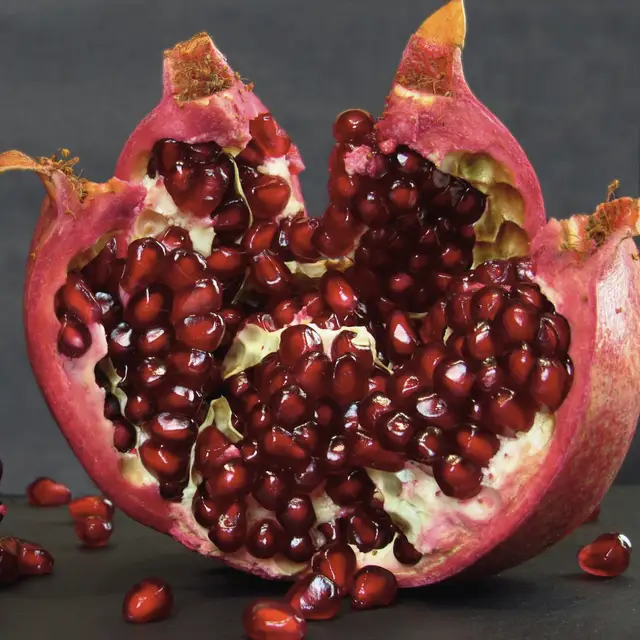
Fruit is not a banned food in diabetes; the sugar inside it comes along with fiber, water, and bulk. A separate article explains how whole fruit and juice part ways. The question here is where that split ends: where on that line do dried and blended forms fall, and what does the long-term data say?
Fruit’s sugar is mostly fructose, glucose, and sucrose, which combines the two. It isn’t loose like sugar in a glass; it sits inside the fruit’s cell walls. Fiber, water, and plenty of bulk surround it. Finishing an apple takes time, takes chewing, fills your stomach.
When the fruit’s form changes, that package changes too. The same fruit becomes three separate things: whole, juiced, and dried.
| Form | Fiber and water | Speed into the intestine |
|---|---|---|
| Whole fruit | Both in place | Needs chewing, leaves the stomach slowly |
| Squeezed fruit juice | Most fiber leaves with the pulp | Liquid, so it passes fast |
| Dried fruit | Fiber stays, water goes | Far denser in the same volume |
| Fruit blended whole | Both stay in place | Texture breaks up, bulk mostly stays |
Fruit juice loses two things: fiber and chewing. Separate the pulp and the fruit’s fiber stays in the strainer, not the glass. This page skips why liquid moves faster than solid; that mechanism sits under “Which drinks raise blood sugar?” Something else decides here: how many fruits went into a glass usually slips by. That many fruits side by side would look like plenty.
In dried fruit water goes, sugar stays. A handful of raisins carries far more carbohydrate than fresh grapes of equal weight. The fiber is still there, but less volume weakens its filling effect. A pocket or a work desk keeps it easily, so eating a lot unnoticed is ordinary.
Blending is its own topic. In a small twenty-person trial in healthy young people, blended fruit’s post-meal response came out lower than whole fruit’s. One small trial doesn’t set a general rule.
The long-term evidence, though, is not one piece. Three cohorts following hundreds of thousands of people for years were analyzed together: whole fruit and juice fell on opposite sides for type 2 diabetes frequency. Yet a meta-analysis pooling juices with no added sugar found no such link. In the sweetened ones the risk was higher.
No ban list comes out of this. The form and the amount decide the outcome more than the kind of fruit. A carton of ready-made juice and an orange on a plate share a name but are two different things. How much fits into a meal is the portion article’s subject.
Sources
- Muraki I, Imamura F, Manson JE, Hu FB, Willett WC, van Dam RM, Sun Q. Fruit consumption and risk of type 2 diabetes: results from three prospective longitudinal cohort studies. BMJ. 2013;347:f5001. doi:10.1136/bmj.f5001
- Xi B, Li S, Liu Z, Tian H, Yin X, Huai P, Tang W, Zhou D, Steffen LM. Intake of fruit juice and incidence of type 2 diabetes: a systematic review and meta-analysis. PLoS One. 2014;9(3):e93471. doi:10.1371/journal.pone.0093471
- Crummett LT, Grosso RJ. Postprandial Glycemic Response to Whole Fruit versus Blended Fruit in Healthy, Young Adults. Nutrients. 2022;14(21):4565. doi:10.3390/nu14214565
- World Health Organization. Guideline: Sugars Intake for Adults and Children. Geneva: World Health Organization; 2015. ISBN 978-92-4-154902-8.
- American Diabetes Association Professional Practice Committee. 5. Facilitating Positive Health Behaviors and Well-being to Improve Health Outcomes: Standards of Care in Diabetes-2026. Diabetes Care. 2026;49(Suppl 1):S89-S131. doi:10.2337/dc26-S005