What are carbohydrates, and how many types are there?
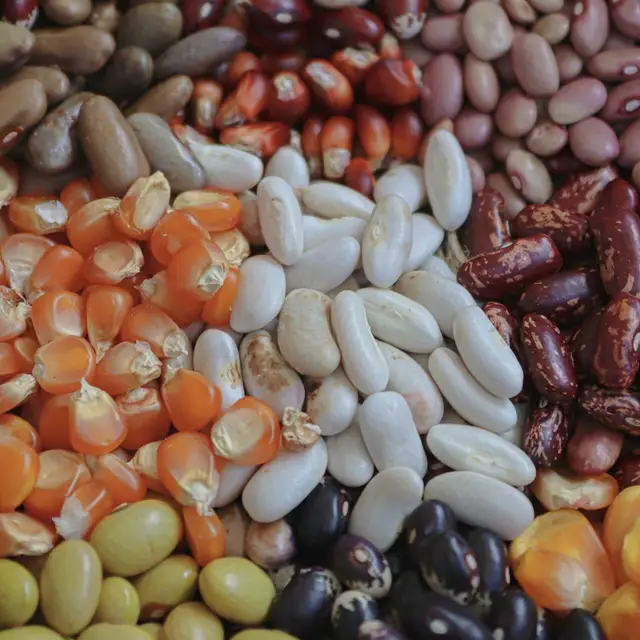
Carbohydrate is one of the three main nutrients in food, and it carries energy to the body. It has three branches: starch, sugar, and fiber. The first two break down into glucose during digestion, while fiber keeps going untouched. The question here is why all three count as one family.
Carbohydrates are a family of nutrients built from linked sugar rings. Some are one ring, some chains thousands of rings long. The saliva enzyme in the mouth starts breaking the chain; enzymes in the small intestine finish the job. Once only single rings remain, they cross the gut wall into the blood. That is the path glucose takes after a meal.
The body does not waste that glucose. Muscles and the brain use it directly as fuel; the surplus is stored in the liver and muscle tissue. The brain is tied to this fuel more tightly than other organs. That is why carbohydrate is the main energy source in most eating patterns.
Starch is the name of the long chain, dense in bread, rice, and potatoes. Sugar is the short chain. In fruit, milk, and sweet drinks, sugar is the main carbohydrate form. Fiber is a third, different kind of carbohydrate that digestive enzymes cannot take apart. The three share a roof, but part ways in the gut. The distinction looks simple on paper. Reading a label, it stands right at the center.
| Everyday example | Dominant carbohydrate form |
|---|---|
| Bread, rice, pasta, oats | Starch and some fiber |
| Apple, banana, orange, strawberry | Sugar and fiber |
| Milk, yogurt | A milk sugar called lactose |
| Lentils, chickpeas, beans | Starch and plenty of fiber |
| Potato, corn, peas | Starch |
Meat, fish, eggs, cheese, and oil carry none of these forms in notable amounts. A separate article covers in detail which food groups stand on the carbohydrate side.
Fiber is the family’s undigested end. The water-soluble and insoluble forms behave differently. Soluble fiber turns gel-like in the gut; the insoluble kind passes largely unchanged. Bacteria in the large intestine break down some of these chains. So fiber is a carbohydrate too, but it takes no part in carrying glucose to the blood.
Sweetness is a misleading clue here. Starch has no sweet taste at all, yet digestion ends at the same glucose rings.
Everyday talk often splits carbohydrate into “simple” and “complex.” That naming describes chain length, not digestion speed. What sets the speed lies elsewhere: whether the kernel was ground, the cooking time, the food’s texture, and what shares the plate. So the “complex” label alone does not mean slow.
Knowing carbohydrate makes it easier to see what is inside a package opened at lunch or a glass on the table, and to understand a label’s lines. Knowing the grams is a separate skill, covered by the label-reading article. The summary is simple. Carbohydrate is not one substance but a family with three faces.
Sources
- Holesh JE, Aslam S, Martin A. Physiology, Carbohydrates. [Updated 2023 May 12]. In: StatPearls [Internet]. Treasure Island (FL): StatPearls Publishing; 2026.
- Daley SF, Shreenath AP. The Role of Dietary Fiber in Health Promotion and Disease Prevention: A Practical Guide for Clinicians. [Updated 2025 Dec 1]. In: StatPearls [Internet]. Treasure Island (FL): StatPearls Publishing; 2026.
- American Diabetes Association Professional Practice Committee. 5. Facilitating Positive Health Behaviors and Well-being to Improve Health Outcomes: Standards of Care in Diabetes-2026. Diabetes Care. 2026;49(Suppl 1):S89-S131. doi:10.2337/dc26-S005
- World Health Organization. Guideline: Sugars Intake for Adults and Children. Geneva: World Health Organization; 2015. ISBN 978-92-4-154902-8.