Which foods raise blood sugar?
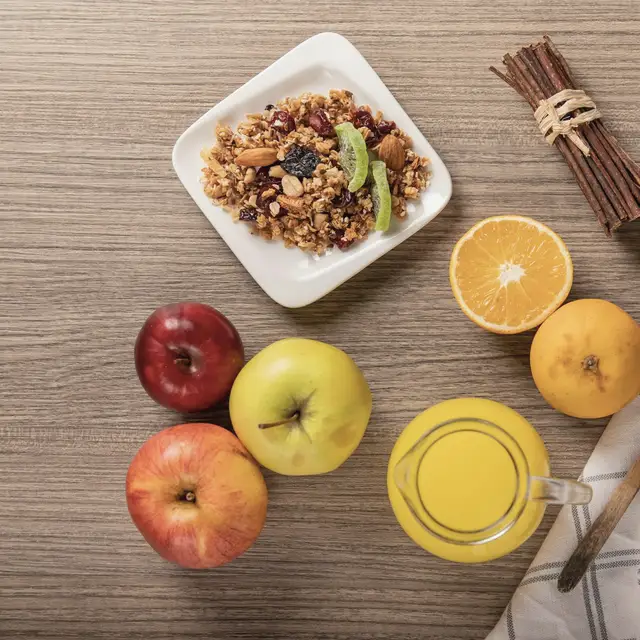
The nutrient that actually raises blood sugar is carbohydrate, and it lives in five separate food groups, not just in sweets. Protein and fat change the speed and timing of the rise. The real question isn’t which food is forbidden, but how much room each group takes up on the plate.
Digestion breaks carbohydrate into glucose, which enters the blood from the small intestine. Fat’s job is different. A physiology review calls it the nutrient that slows stomach emptying most strongly. Protein slows the stomach too, and separately stimulates insulin secretion. In fat- and protein-heavy meals, their share doesn’t end with the delay. They add to the post-meal rise themselves. So the same slice of bread reaches the blood at different hours, depending on its company. The World Health Organization’s carbohydrate guideline weighs quality over quantity: how fast the starch digests, how much fiber comes along. Think of carbohydrate as five groups, not single foods.
- Grains and flour: bread, pasta, rice, crackers, breakfast cereal.
- Starchy vegetables: potatoes, sweet potatoes, corn, peas, pumpkin.
- Legumes: beans, chickpeas, lentils, fava beans.
- Fruit and dairy: apples, bananas, grapes, milk, yogurt.
- Sugar and sugary drinks: honey, jam, fruit juice, carbonated drinks.
The most common mix-up sits in rows two and three. Potatoes, corn, and peas live in the vegetable aisle; digestion files them with the grains. Legumes too, only more slowly. A review in the American Journal of Clinical Nutrition writes that legumes produce about half the rise of other carbohydrate foods. Its second finding stings more: whole-wheat bread doesn’t behave much differently from white bread. The real divide isn’t whole grain. It’s whether the kernel has been ground. Once ground into flour, any grain digests quickly; intact rice kernels move more slowly than that same grain’s flour.
- Can you eat fruit?
- Fruit sits in the map’s fourth row, on the carbohydrate side. A whole apple and a glass of fruit juice aren’t the same thing. Without the pulp, the speed goes up.
- Are all vegetables fair game?
- Cucumbers, tomatoes, and leafy greens fall outside this map; potatoes, corn, and peas sit in row two.
- Why aren’t cheese and eggs on this list?
- Both stay on the protein-and-fat side and don’t push glucose into the blood as fast as carbohydrate. But they delay the arrival of the bread beside them; in a protein- and fat-rich meal, the rise can stretch to hours after eating.
This map isn’t a ban list. It’s a bookkeeping list. When two foods from the same group sit side by side, both go into the count. Bread and fruit juice at breakfast are one such pair.
Sources
- World Health Organization. Carbohydrate intake for adults and children: WHO guideline. Geneva: World Health Organization; 2023. ISBN 978-92-4-007359-3.
- Jenkins DJA, Willett WC. Perspective on the health value of carbohydrate-rich foods: glycemic index and load; fiber and whole grains. Am J Clin Nutr. 2024;120(3):468-470. doi:10.1016/j.ajcnut.2024.07.004
- Nesti L, Mengozzi A, Tricò D. Impact of nutrient type and sequence on glucose tolerance: physiological insights and therapeutic implications. Front Endocrinol. 2019;10:144. doi:10.3389/fendo.2019.00144